Ghost Party: The Display Font for Spooky, Edgy Branding
Capturing Kinetic Energy in Every Letterform
When you need a typeface that doesn't just sit quietly on the page but practically leaps off it, you're looking for something with genuine presence. Ghost Party is a creative style display font built for exactly that kind of impact. This isn't a typeface for body copy or delicate invitations—it's designed to scream from headlines, dominate logos, and set an unmistakable mood the instant someone sees it.
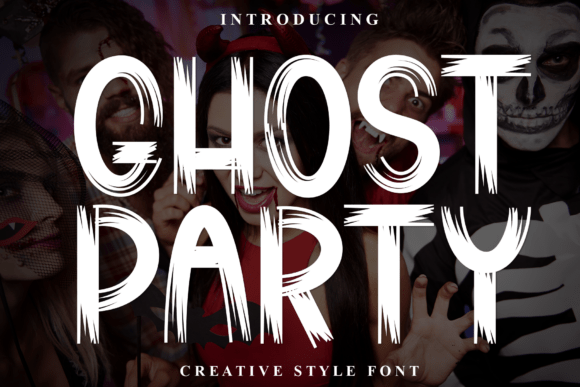
What makes Ghost Party immediately recognizable is its heavy, bold strokes paired with aggressive brushed textures along the edges. Think of dry paint dragged across a rough surface, or a thick marker scrawling across a wall in a hurry. The letterforms carry a raw, almost unfinished quality that feels intentionally rebellious. There's nothing polished or corporate about this typeface, and that's entirely the point. It channels the chaotic energy of a celebration you'd find in a horror movie—exciting, a little dangerous, and impossible to ignore.
The high-contrast textures baked into Ghost Party serve a practical purpose beyond pure aesthetics. Even when placed against complex, dark, or visually busy backgrounds, the text remains legible. That's a genuine concern with many decorative display fonts, and Ghost Party handles it well. The rough edges and heavy weight create enough visual separation that letters don't bleed into their surroundings, which matters enormously when you're working with gritty overlays, photographic backgrounds, or layered digital compositions.
Where Ghost Party Truly Shines
Halloween event branding is the obvious starting point, and for good reason. Party flyers, haunted house promotional materials, costume contest announcements, and seasonal social media campaigns all benefit from a typeface that immediately signals "spooky celebration." But limiting Ghost Party to October would be selling it short.
Horror-themed gaming streamers have found real value in this kind of display font. When your entire visual brand revolves around dark, atmospheric content, your typography needs to match that energy. Ghost Party works beautifully for stream overlays, channel logos, subscriber alerts, and thumbnail text. It gives that immediate visual shorthand—before someone even reads the words, they already sense the vibe of the content.
Edgy street-style apparel is another natural fit. T-shirt designs, hoodie graphics, and merchandise branding often need typefaces that feel raw and countercultural. Ghost Party delivers that without looking like it's trying too hard. The brushed texture gives it an organic, hand-crafted quality that resonates with audiences who appreciate authenticity over slick production values.
Consider these additional applications where this creative font performs well:
- Horror podcast logos — Primary branding that sets the tone before a single episode plays
- Music event posters — Especially for metal, punk, or electronic genres with darker aesthetics
- Book cover design — Horror novels, thriller series, and dark fantasy titles
- YouTube thumbnails — Horror content creators, true crime channels, and Halloween-themed videos
- Social media graphics — Instagram stories, TikTok overlays, and seasonal promotional posts
- Packaging design — Artisanal products targeting alternative or counterculture markets
Understanding Its Personality and Visual Style
Every typeface communicates something beyond the literal words it forms. Ghost Party's personality reads as rebellious, atmospheric, energetic, and slightly unhinged. It's the typographic equivalent of walking into a warehouse party lit by strobes and fog machines—exciting but with an edge that keeps you slightly on guard.
The brushed texture details are what separate Ghost Party from standard bold display fonts. Without those rough, dry-brush edges, you'd have something that reads more as straightforward impact typography. The texture adds character, warmth, and that crucial handmade quality. It suggests that someone created this with intention and craft rather than simply clicking a button in design software.
When evaluating whether Ghost Party fits your project, ask yourself a few honest questions. Does your brand or project lean into darker, edgier, or more alternative aesthetics? Is the primary use case for headlines, logos, or short display text rather than paragraphs? Does your target audience respond to bold, unconventional visual language? If you're answering yes to most of these, this typeface deserves serious consideration.
Pairing Ghost Party with Other Design Elements
A display font like Ghost Party rarely works in isolation. You'll almost always need a secondary typeface for supporting text, and the pairing choices you make will significantly affect the overall cohesion of your design.
For body copy accompanying Ghost Party headlines, lean toward clean, highly readable options. A simple sans serif font with generous letter spacing provides excellent contrast without competing for attention. You want the supporting text to step back and let the display typeface own the spotlight. Avoid pairing it with other textured or decorative fonts—that combination typically creates visual noise rather than hierarchy.
Color schemes matter enormously with this typeface. Neon colors—electric greens, hot pinks, toxic yellows—against dark backgrounds amplify the rebellious energy. Traditional Halloween palettes of orange and black work reliably, but don't overlook more unexpected combinations. Deep purples with neon cyan, or blood reds against charcoal, can create sophisticated horror aesthetics that feel fresh rather than cliché.
Gritty overlays complement Ghost Party naturally. Grain textures, light leaks, distressed paper backgrounds, and subtle grunge patterns all enhance the typeface's existing character. The key is restraint—stack too many textured elements together and you'll overwhelm the design rather than enhance it.
Practical Considerations for Professional Use
Before committing to Ghost Party for any commercial project, review the licensing terms carefully. Commercial font licensing varies significantly between foundries and marketplaces. Some licenses cover unlimited personal use but require separate purchases for commercial applications. Others bundle everything together. Make sure your specific use case—whether that's client work, merchandise production, or digital content—is covered under the license you're purchasing.
Testing readability at your intended size and medium is non-negotiable with any display typeface. What looks commanding at 120 pixels on your monitor might become muddy at smaller sizes or when printed. Set your actual headline text, view it at the size it will appear in final production, and get feedback from people who haven't been staring at the design for hours. Fresh eyes catch readability issues that yours will miss.
Check what's included with the font family before purchasing. Some premium font packages include multiple weights, stylistic alternates, extended character sets, or additional glyphs that expand your creative options significantly. These extras can make the difference between a typeface that works for one project and a design asset that earns its place in your permanent toolkit.
Ghost Party occupies a specific niche in the broader landscape of modern typography. It won't replace your workhorse serif font for editorial design or your go-to sans serif for web design projects. But when you need a creative style display typeface that brings genuine attitude and atmospheric energy to headlines, logos, and branding materials, it delivers something that's genuinely difficult to find elsewhere. The combination of bold weight, textured brushwork, and rebellious personality makes it a distinctive addition to any designer's font library—provided the project actually calls for that kind of energy.