Minimalist: The Handmade Typeface with an Airy, Modern Soul
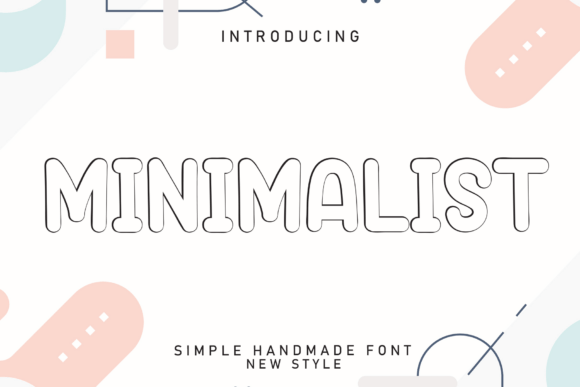
In the vast ocean of typefaces, finding one that feels both fresh and familiar can be a challenge. You want something with character, but not so much that it overwhelms your message. Enter the Minimalist font. This isn't your typical minimalist aesthetic in the stark, Swiss design sense. Instead, it's a "simple handmade" and "new style" typeface that celebrates the beauty of hollow, clean silhouettes. Think of it as the playful, more approachable cousin to a heavy outline font, one that brings a sense of lightness and contemporary craft to any project.
The Anatomy of Air: Understanding Minimalist's Design
At its core, Minimalist is a display font built on contrast and space. Its most defining feature is the outline-only structure, but the execution is key. The strokes aren't thin and wire-like; they are thick and pillowy, with soft, rounded edges that feel almost tactile, like inflated letters. This creates generous internal counters—the enclosed or partially enclosed spaces within letters like 'O', 'B', or 'e'. The result is a typeface that feels spacious and breathable, even at large sizes.
This "weightless" quality is its superpower. The open design allows backgrounds to peek through, making it an exceptional tool for layering. Imagine a vibrant photograph of a sunset or a rich, textured paper stock. Using a solid, heavy font might block the background entirely. With Minimalist, the color and texture become part of the letterforms themselves, creating a dynamic, integrated visual. It’s a modern take on bubbled letterforms, offering a soft, friendly, and undeniably contemporary vibe that avoids the coldness of some geometric sans serifs.
Where Does Minimalist Font Shine? Practical Applications
Understanding a font's personality is one thing; knowing where to deploy it is another. The Minimalist typeface thrives in contexts where you want to capture attention without shouting. Its versatility makes it a valuable asset in a designer's toolkit, crossing the boundaries between digital and print, personal and commercial.
- Brand Identity & Logo Design: For brands aiming for a clean, modern, and approachable image, Minimalist is a stellar choice. It’s perfect for a skincare line that wants to emphasize purity and lightness, a boutique hotel seeking a contemporary feel, or a creative agency that prides itself on innovative thinking. The hollow nature allows for clever color applications—imagine a logo where the brand's primary color fills the letters on a white background, or vice versa.
- Editorial & Packaging Design: Use it for magazine covers, chapter headings in a book, or pull quotes to inject a dose of modern typography. On packaging, it works beautifully for product names on everything from artisanal coffee bags to minimalist beauty products. The key is to use it at a scale where its unique silhouette can be appreciated, typically for headlines, not body copy.
- Digital & Social Media: This is where Minimalist truly excels. It’s a fantastic creative font for social media graphics, Instagram story backgrounds, and website hero sections. Overlay a bold statement in Minimalist over a video loop or a gradient background, and you have an instantly engaging piece of content. Its readability on screen, when used appropriately, makes it a strong contender for web design headers and call-to-action text.
- Personal & Craft Projects: Don’t overlook its potential for personal use. It’s a wonderful font for wedding invitations, greeting cards, DIY printables, or crafting labels. Its handmade quality adds a personal touch without looking overly casual or childish, striking that perfect balance between crafted and professional.
Making It Work: Font Pairing and Practical Considerations
A great font often works best as part of a team. One of the most effective strategies with Minimalist is to pair it with a solid, heavy sans serif font. This creates a sophisticated contrast of volume and air. The Minimalist font provides the headline punch and visual interest, while the sans serif (like a bold weight of Helvetica, Futura, or a modern grotesque) handles the supporting text with clarity and stability. You could also experiment with pairing it with a clean serif font for a different kind of elegant contrast, or even a simple script font for a touch of whimsy in the right context.
Before you commit, always test the font in your specific application. Readability is paramount. While Minimalist is designed for impact, its outline nature means it can lose clarity at very small sizes or on overly busy backgrounds with similar color values. Always check how it renders on both light and dark backgrounds. If you're using it for a logo, ensure it remains legible when scaled down to the size of a favicon or a social media profile picture.
Finally, consider the practicalities of licensing. If you're a small business owner, entrepreneur, or using it for any commercial project, ensure you have the correct commercial license. Most premium font licenses are straightforward, but it's an essential step to avoid legal headaches down the line. Review what's included—does the font family come with multiple weights, alternates, or multilingual support? These features can expand its utility significantly.
A Final Thought on Impact
The Minimalist font isn't just another typeface; it's a design statement. It communicates modernity, creativity, and a thoughtful approach to space. It asks the viewer to look a little closer, to appreciate the form and the background in unison. By understanding its unique characteristics and applying it with intention, you can leverage this new style font to create designs that are not only understated but also profoundly impactful. It’s a tool for making the empty space just as powerful as the filled one.