Jelly Romance: Bouncy Love with a Crafty Twist
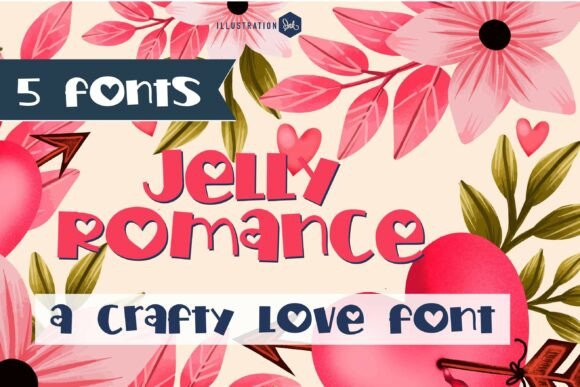
There’s a particular kind of joy in typography that feels alive. It’s the difference between a font that merely presents words and one that makes you smile before you’ve even finished reading the sentence. Jelly Romance is exactly that kind of typeface—a creative font built on thick, rounded letterforms and an energetic, slightly irregular baseline that gives every word a sense of movement and bounce. It’s playful without being childish, charming without sacrificing clarity.
What sets Jelly Romance apart visually is its thoughtful integration of heart-shaped counters and dots. The counter inside the lowercase “o” or “a” might subtly mimic a heart, while the dots on the “i” and “j” carry that same affectionate motif. These details inject a handmade, crafty warmth into the text, making it feel personal and approachable. The overall weight is chunky and bold, which ensures strong presence whether you’re cutting vinyl decals on a Cricut or designing a social media post.
Where This Typeface Truly Shines
Jelly Romance isn’t a serif font for long-form body copy, nor is it a neutral sans serif font for corporate reports. It’s a display font—and a highly expressive one at that. Its personality makes it ideal for projects where the goal is to connect emotionally, convey warmth, or inject a dose of fun. Think greeting cards, wedding invitations with a relaxed vibe, children’s book titles, bakery branding, or party supplies. It’s also a natural fit for packaging design for products like artisanal sweets, handmade cosmetics, or playful stationery.
For crafters and hobbyists, this premium font is a standout. The thick strokes and clean outlines cut beautifully on vinyl cutting machines, making it perfect for custom name decals, nursery wall art, or vibrant birthday banners. Its bouncy rhythm also translates well to social media graphics, especially for brands targeting a youthful, energetic audience. Use it for Instagram stories, promotional posts, or YouTube thumbnails where you want text to pop and convey immediacy.
Pairing and Practical Application
A font like Jelly Romance works best when it’s given room to be the star. In most designs, it should be used for headlines, logos, or short bursts of emphasis—not for paragraphs. For body text, pair it with a clean, legible sans serif font or a simple serif font to create contrast and maintain readability. This pairing establishes a clear visual hierarchy, guiding the viewer’s eye naturally from the playful headline to the supporting content.
When selecting font pairings, consider the mood you’re creating. Jelly Romance alongside a geometric sans serif like Montserrat or Poppins can yield a modern, “pop” aesthetic. Alternatively, pairing it with a handwritten font or a script font can enhance the sketchbook-inspired, DIY feel. Always test your combinations at the actual size they’ll be used—what looks balanced on a large poster might feel cluttered on a business card.
Evaluating Fit and Licensing
Before committing to Jelly Romance for a commercial project, ask yourself if its personality aligns with the brand’s voice. It’s excellent for a cupcake shop, a boutique greeting card line, or a children’s clothing brand. It might be less suitable for a law firm or a financial institution. Always consider your audience’s expectations and the context in which the font will appear.
Review the included styles and character set. Does it support the language you need? Are there enough weights or alternates for your design? Since Jelly Romance is often distributed as a commercial font, verify the licensing terms. Ensure it covers your intended use—whether for digital ads, printed merchandise, or logo design. Reputable design assets marketplaces will provide clear licensing information.
Making It Work in Modern Design
In a world saturated with minimalist modern typography, a font like Jelly Romance offers a refreshing dose of personality. It’s a reminder that typography can be joyful and tactile, even in digital spaces. Use it to break visual monotony in a brand’s brand identity system, perhaps for special editions, holiday campaigns, or product launches where a more relaxed tone is appropriate.
For web design, use it sparingly—perhaps for a hero section headline or a call-to-action button. Its bold weight ensures it remains legible at various screen sizes, but avoid using it for navigation menus or lengthy text blocks. In editorial design, it can make chapter titles or pull quotes feel more engaging, especially in lifestyle magazines or recipe books.
Ultimately, Jelly Romance is a tool for connection. It doesn’t just spell out words; it conveys a feeling. By understanding its strengths and applying it thoughtfully, you can create designs that are not only visually appealing but also emotionally resonant. It’s a typeface that invites interaction, making it a valuable addition to any designer’s toolkit when the project calls for a little bounce, a lot of charm, and a whole lot of heart.